
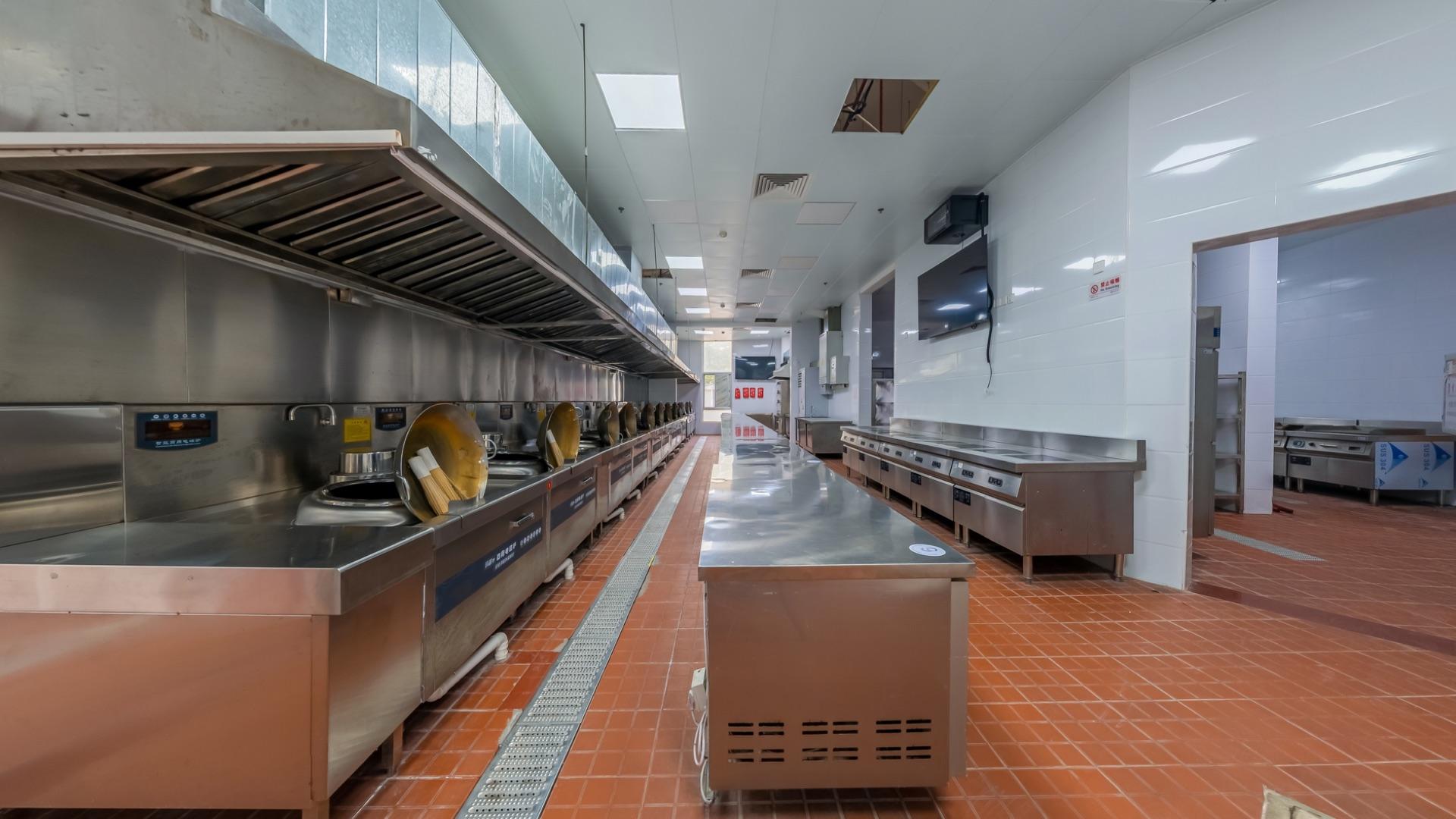
Grease builds up inside every commercial kitchen exhaust system: in the hood, the filters, the ductwork and the fan on the roof. Left alone, it becomes a fire risk, slows airflow and makes the kitchen hotter and smokier. CS7 cleans kitchen exhaust systems for restaurants, cafés, fast-food chains, hotels, care homes, schools and plant cafeterias across Winnipeg and Southern Manitoba, after hours so your kitchen doesn't have to close.
Why kitchen exhaust cleaning matters
Every time you cook, grease-laden vapour rises into the hood. Filters catch some of it. The rest condenses on the inside of the hood, the ductwork and the exhaust fan. Over weeks and months that layer gets thicker, and it is flammable.
- Fire risk. A flare-up on the cooking line can travel into a greasy duct, where it is hard to reach and hard to put out. Keeping the system clean removes the fuel.
- Inspections and insurance. Fire inspectors and insurers expect commercial kitchen exhaust systems to be cleaned on a regular schedule, and they often ask to see when it was last done.
- Airflow and comfort. A clean system pulls smoke, heat and odours out of the kitchen properly. Your staff work in a cooler, clearer kitchen, and the fan doesn't have to work as hard.
- Smell and pests. Old grease smells, and it attracts pests. Cleaning gets rid of both at the source.
What we clean
A proper hood cleaning covers the whole exhaust path, not just the part you can see from the kitchen.
| Part of the system | What we do |
|---|---|
| Hood canopy | Degrease the inside and outside of the hood, including corners, seams and the grease trough. |
| Filters | Remove, soak and wash baffle filters, then refit them. |
| Ductwork | Clean the accessible ductwork from the hood towards the roof through existing access panels. |
| Exhaust fan | Clean the fan housing and blades on the roof or wall. |
| Rooftop grease containment | Check and clean around the fan's grease containment so grease doesn't build up on the roof. |
| Access panels | Open, clean behind and close the existing access panels; we tell you if the system needs more panels to be cleaned properly. |
How a cleaning works
- 1
Protect the kitchen
We shut down and cover the cooking line and equipment, and set up containment so grease water goes where it should.
- 2
Degrease and scrape
Heavy grease is scraped off, then the hood and plenum are degreased and washed down.
- 3
Ducts, fan and filters
We clean the accessible ductwork and the exhaust fan, and wash the filters.
- 4
Clean up and record
We clean the kitchen we worked in, take before and after photos, put a dated sticker on the hood and leave a service record.
When we are done, the cooking line is uncovered, wiped down and ready to use. The hood gets a dated service sticker, and you get before and after photos of the hood, ducts and fan so you can see the work, even the parts on the roof.
Cleaning frequency
How often should your hood be cleaned?
How often you need a cleaning depends on how much you cook and what you cook. Charbroilers, woks and 24-hour kitchens produce far more grease than a café that mostly bakes. The general guideline most people work from is NFPA 96, the fire code standard for commercial kitchen ventilation:
| Type of kitchen | Typical schedule (NFPA 96 guideline) |
|---|---|
| High volume: 24-hour cooking, charbroiling, wok cooking | Every 3 months (quarterly) |
| Moderate volume: most restaurants and cafeterias | Every 6 months (twice a year) |
| Low volume: churches, seasonal businesses, day camps | Once a year |
This is a guideline, not a rule for your kitchen. Your local fire authority has the final say, and your insurer may set its own schedule. If you aren't sure which applies to you, we can look at your system and your cooking and suggest a schedule you can check with them.
Who we work with
We clean kitchen exhaust systems for:
- Restaurants, cafés and bars
- Fast-food and quick-service chains
- Hotels and banquet kitchens
- Care homes and seniors' residences
- Schools, colleges and daycare kitchens
- Plant, office and hospital cafeterias
- Arenas, community halls and church kitchens
After-hours service so your kitchen stays open
Kitchens make money when they are cooking. We schedule hood cleaning after close, overnight or on the day you are closed, and we're open 24/7 for booking and questions. The system only needs to be off and cool while we work. For chains and multi-site operators, we can set up a recurring schedule for every location.
Areas we serve
We clean commercial kitchens in Winnipeg and across Southern Manitoba, including Morden, Winkler, Altona, Carman, Morris, Steinbach, Portage la Prairie and Brandon.
Our process from first call to a clean system
- 1
Call or request a quote
Tell us about your kitchen: number of hoods, what you cook and how busy you are.
- 2
System check
We look at the hood, ducts, access panels and fan so the quote matches the job.
- 3
Scheduled cleaning
We clean after hours on a date that suits you, and send the photos and service record.
- 4
Recurring schedule
We book your next cleaning based on your cooking volume, so you don't have to remember.
Certifications and training
Our crews are background-checked and trained in safe chemical handling, including WHMIS.
Kitchen Exhaust Hood Cleaning: Common Questions
How often should a kitchen exhaust hood be cleaned?
It depends on how much and what you cook. As a general guide, NFPA 96 suggests quarterly cleaning for high-volume kitchens (24-hour cooking, charbroiling, woks), twice a year for moderate-volume kitchens, and once a year for low-volume kitchens such as churches, seasonal businesses or day camps. Your local fire authority and insurer have the final say on the schedule that applies to you.
How long does a hood cleaning take?
Most single-hood restaurant kitchens take a few hours. Larger systems with long duct runs, several hoods or heavy grease build-up take longer. We give you a time estimate with your quote after we look at the system.
Do we have to close the kitchen?
No. We clean after hours, overnight or on your closed day, so the kitchen is ready for the next service. The hood and cooking line must be off and cool while we work.
Do you leave a service sticker or record?
Yes. After each cleaning we put a dated service sticker on the hood and leave a dated service record, with before and after photos, for your files.
Do you clean the exhaust fan on the roof?
Yes, the exhaust fan is part of the system we clean, together with the hood, filters and accessible ductwork.
What does kitchen exhaust hood cleaning cost?
Price depends on the number of hoods, duct length and access, how much grease has built up, roof access to the fan, and how often you book. We quote after a short look at your system, and the quote is free.
Do you service our town?
We clean commercial kitchens in Winnipeg and across Southern Manitoba, including Morden, Winkler, Altona, Carman, Morris, Steinbach, Portage la Prairie and Brandon. Call us if your town isn't listed.
Related services
Kitchen exhaust hood cleaning often goes together with:
- Duct cleaning for the building's heating and ventilation system
- Industrial cleaning and degreasing for food plants and production kitchens
- Commercial cleaning for the rest of your restaurant or facility
Book your kitchen exhaust hood cleaning
Call us or request a free quote. Tell us how many hoods you have and how busy your kitchen is, and we'll set up a cleaning that fits around your hours.